


Israeli Prime Minister Benjamin Netanyahu has made guaranteeing Israel's security his core doctrine, but now his leadership hangs in the balance with critics accusing him of failing to protect his country from attack.
 Full Story
Israel's upcoming elections are being followed closely by its regional neighbors, who are aware that any outcome will have ramifications far beyond the country's borders.
In his Likud party's campaign launch this month, Prime Minister Benjamin Netanyahu repeated his refrain that he "has changed the face of the Middle East" and vowed to continue doing so.
 Full Story
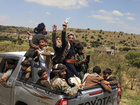
Yemeni factions fighting the Iran-backed Houthis are united mainly in one thing — their opposition to the rebels who control the country's north and have recently advanced along its Red Sea coastline.
But beyond that, the groups fighting under the banner of Yemen's internationally recognized government are divided by geography, foreign patronage and competing visions for what their country should look like if the Houthis are pushed back.
 Full Story
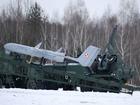
More than four years after Russia's full-scale invasion of Ukraine, European nations worry Moscow could escalate the conflict there and beyond, targeting Kyiv's supporters.
 Full Story
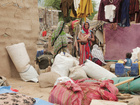
As Houthi rebels closed in, Eshraq Abdel Gelil and her husband fled their home, walking through the mountains before catching a ride to a nearby city. Four months pregnant, she feared another miscarriage.
They are among more than 125,000 people who have fled as the Iran-backed rebels have advanced down the Red Sea coast to a key maritime chokepoint. The offensive, linked to the wider Iran war, has threatened Saudi oil exports, pushed up global fuel prices and rattled markets.
 Full Story
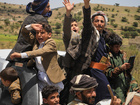
At various times over the last decade, Saudi Arabia, the United Arab Emirates, the United States, Britain and Israel have carried out punishing air raids on Yemen's Houthi rebels — only to see them grow even stronger.
Now, as the Iran-backed Houthis advance on a key maritime chokepoint and strike Saudi oil facilities, rattling world markets, there is little that can be done to stop them that hasn't been tried before.
 Full Story
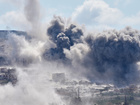
Israel's demolition on Thursday of a tunnel network used by Hezbollah as a command center in southern Lebanon, near the border, represents a significant setback for the Iran-backed group.
Experts said that while Hezbollah is far from defeated, the group was now exposed after two fierce wars with Israel in which it suffered major blows including the loss of much of its top leadership and Israel's occupation of parts of southern Lebanon.
 Full Story
In recent weeks, the United States has succeeded in loosening Iran's grip over the Strait of Hormuz while virtually shutting down Iran's own oil exports, accelerating its economic free fall.
But the war launched by the U.S. and Israel in February — intended to last a few weeks — is still far from over, and the stalemate is costly for both sides. An agreement reached in June quickly crumbled, with no sign of diplomatic progress since then. Low-level fighting persists, and the U.S. does not seem to have an exit strategy.
 Full Story
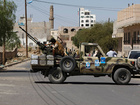
In July, Saudi Arabia and the United States bombed Iran-backed militias in Iraq after blaming them for drone attacks on Saudi oil facilities that had been claimed by Yemen's Houthi rebels, another Iranian ally.
Now, regional officials tell The Associated Press that the Houthis helped the Iraqi militias plan and execute the two-day swarm attack, showing a new level of coordination.
 Full Story
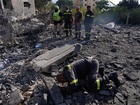
Israel's air force carried out two airstrikes early Monday on a southern Lebanese village, killing at least 11 people and wounding others, including women, children and medics, Lebanon's Health Ministry said.
Monday's strikes came amid a new round of escalation between Israel and Hezbollah despite a truce reached more than two months ago. The strikes also came days after Israel's military said it is in "operational control" of the strategic Ali Taher hill that overlooks several villages as well as main roads leading to the city of Nabatieh.
 Full Story


