


Global Syria Uncertainty Takes Its Toll on Edgy Damascus
إقرأ هذا الخبر بالعربية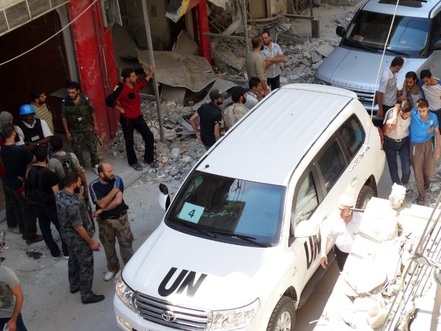
Strike or no strike? The uncertainties playing out on the global stage over military action in Syria were taking their toll Friday on an edgy Damascus, as a U.N. team prepared to leave the country.
"It's terrifying to stay in Damascus and wait for the strikes," said a fearful Josephine, who was planning to leave for Beirut at the weekend.
"We don't know where they will hit," the 50-year-old mother, who would not give her surname, added above the sound of bombings pounding areas not far from the Syrian capital.
Western governments earlier this week led the charge for firm action in Syria after an alleged deadly gas attack in the Damascus suburbs last week drew shocked condemnation.
But since then, signs that a broad coalition for a military strike was forming have slowly cracked and dwindled amid questions over intelligence linking the regime of Bashar Assad to the attack.
For some in Damascus, the presence of U.N. inspectors probing the alleged incident -- which Syria's opposition says killed more than 1,300 people -- is protection they fear will vanish as soon as the experts leave the war-torn country.
"I want to hold on to the inspectors so that they don't leave Syria," a fearful Samar told Agence France Presse.
"I'm scared, I don't want a strike," the 60-year-old doctor added.
The inspectors, who collected countless samples from the sites of the alleged August 21 attack to try and determine what actually took place, are due to leave Syria by Saturday morning and report back to U.N. chief Ban Ki-moon.
What happens after that is a mystery.
British lawmakers on Thursday rejected their government's call for a military strike in Syria, dealing a blow to Western attempts to put the coalition together.
Germany and Canada have ruled out military action, and Italy has warned that strikes could turn the 29-month conflict global.
France, on the other hand, has said it remains committed to a firm response on Syria while the United States says it may even be willing to go it alone.
In Damascus, this uncertain to-and-fro is weighing on beleaguered residents, some of whom greeted news of Britain's shock rejection of military action with resignation and even suspicion.
"It's been more than a year that we experience war every day," said Hasna Hassan, a 32-year-old woman.
"Mortars fall on my district (anyway) so the only difference will be the type of missile... Before we risked being murdered by our brothers, now by the West."
For Alia Ali, a 28-year-old teacher, Britain's shock rejection does not mean much.
"Even if it doesn't participate directly, it is one of the military and media supporters of the terrorists in Syria," she said, referring to the name given to rebels by the Assad regime.
"Its decision not to take part in the strike doesn't mean that its role in the war is over."
But others are more positive.
"The British parliament has taken the first step to encourage the U.S. and French parliament to follow it by rejecting war against Syria," said Hiba, a 23-year-old law student.
"I'm very reassured. A government that has been leading a war for more than two years will not be affected by strikes that last only two or three days."
The conflict pitting the regime against different factions of rebels has so far killed more than 100,000 people, according to the United Nations.
