


Spotlight

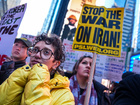
Iran's chief negotiator Mohammad Bagher Ghalibaf said Tuesday that if his country's security was not guaranteed, no infrastructure in the region would be safe from attack, state media reported.
"In a region where we cannot sell oil, no one else will sell oil either; or if our security is not guaranteed, no infrastructure will remain safe," said Ghalibaf, who is also Iran's parliament speaker, according to video released by state TV.
 Full Story
Iran’s supreme leader, Ayatollah Mojtaba Khamenei, has praised his country’s fighters for allegedly preventing "enemy forces" from "roaming freely" in the Strait of Hormuz.
Khamenei said in a message carried by the state broadcaster on Monday that Iran’s enemies now "do not come" closer to the strait than the Arabian Sea, which is part of the Indian Ocean.
 Full Story
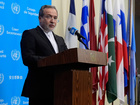
Three officials tell The Associated Press that mediators were still working with Iran and the United States on a deal to end the fighting and open the Strait of Hormuz, with the indirect talks expected to resume on Monday.
The details were revealed as the war enters its eighth month after causing widespread economic suffering. Multiple efforts to allow safe shipping on one of the world's most crucial waterways have failed.
 Full Story
Benjamin Netanyahu traveled secretly to the United Arab Emirates over the weekend to ask its leader to deny reports he'd warned the Israeli prime minister about a looming Hamas threat ahead of the Palestinian militant group's Oct. 7, 2023 attack on southern Israel.
The meeting between Netanyahu and Sheikh Mohamed bin Zayed Al Nahyan took place on Sunday, two people who were briefed on the Israeli leader's trip confirmed on Monday.
 Full Story
Israel's upcoming elections are being followed closely by its regional neighbors, who are aware that any outcome will have ramifications far beyond the country's borders.
In his Likud party's campaign launch this month, Prime Minister Benjamin Netanyahu repeated his refrain that he "has changed the face of the Middle East" and vowed to continue doing so.
 Full Story
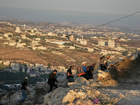
Israeli Foreign Minister Gideon Saar said the government had notified the Dutch embassy in Israel that its diplomats in Ramallah had to leave within one week.
Saar said the decision was in response to a Dutch ban that went into effect on Sept. 22 on the “import, purchase and sale of goods” originating from Israeli settlements in the occupied West Bank, which the Netherlands, like most of the international community, considers illegal.
 Full Story
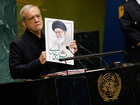
State media in Iran on Monday reported that no new talks were planned with the United States, after U.S. President Donald Trump told media he expected more negotiations.
"Iran's delegation in New York (for the U.N. General Assembly) has no plans for negotiations with the United States," said the official IRNA news agency, citing an unnamed source close to the group.
 Full Story
Israel's far-right finance minister Bezalel Smotrich called on Sunday for the annexation of areas of south Lebanon and the Gaza Strip currently under Israeli military control and for Israeli forces to "go to war" against Palestinians in the occupied West Bank.
"I would like us to annex at least as far as the Yellow Line in Gaza (which demarcates the areas under Hamas and Israeli control) and as far as the Litani River in Lebanon... because if a war ends along the same lines where it began, what will deter the enemy from going to war again," Smotrich said in a podcast for Israeli news site Ynet.
 Full Story
U.S. Treasury Secretary Scott Bessent said that he had sent envoys around the world to pressure countries to economically isolate Iran, hailing new restrictions targeting the country's airlines and banks.
"At my direction, teams were dispatched across the globe to engage with countries and demand action against the Iranian regime," he said on X. "These efforts are delivering results."
 Full Story
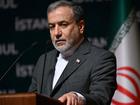
Iran stood firm Sunday on its conditions for reopening the Strait of Hormuz, despite U.S. President Donald Trump's rejection of the proposal that had created some optimism for breaking the Mideast war stalemate.
The waterway is key to the world's energy supply and is now central to the conflict between Washington and Tehran, which was triggered nearly seven months ago with deadly strikes on Iran.
 Full Story


